Wednesday, February 22, 2017

A Go-To Guide: English Articles, Pt. 1


When working with students that speak English as a second, third, or even fourth language, we frequently discuss the use of articles in standard written English.

Articles are some of the smallest words in English — the, a, and an —and as a native speaker, articles are something I take for granted. But in many of the languages students bring to the Writing Center, these little indicators are already built into the word, usually revolving around whether the word is masculine or feminine. For example, cat is considered a feminine word in German, hence the built-in article is "die." When speaking about "the cat," one would use "die katze." Similarly, "the dog" is considered masculine, so "der hund" is used.

When attempting to explain why the student needs “the” in front of a word, I’m often at a loss for a clear and technical explanation. I never had to think about why these words were so important — at least until now.


The English articles include the, a, and an. The is used to describe a specific noun, whereas a/an describes a non-specific noun.

In grammar terms:

The = definite article
A/An = indefinite article

Here’s an example:

“Let’s pet the dog.”

In this sentence, the refers to a specific dog. Perhaps the speaker sees a friendly dog on the street, or visits a shelter with a friend. The speaker might not know the dog’s name, but using the indicates a specific dog.

In this same example, perhaps the speaker does know the dog’s name. By replacing “the dog” with a proper noun —the dog’s name — the article would be unnecessary (ex: “Let’s pet Rufus.”).

Here’s the next example:

“Let’s pet a dog.”

In this sentence, a refers to a dog, but not a specific one, as a could be referring to any dog at all. An works the same way (ex: “Let’s pet an elephant.”).

In these sentences, a/an indicates that we don’t know the specifics on which dog or elephant we’d like to pet.

One of the hardest parts about articles is figuring out if we need to use a or an in a sentence. Despite both being indefinite articles, choosing which one to use relies on the sound following the next word.


If the word following the article is a singular noun that begins with a consonant, use a:

a girl; a truck; a motorcycle; a park; a cat

If the word following the article is a singular noun that begins with a vowel, use an:

an eggplant, an olive; an eagle; an anteater

If the word following the article is a singular noun that begins with a consonant sound, use a:

      a unicorn (sounds like “yoo-nee-corn,” begins with a consonant “y” sound, so a is used); a university; a unicycle     

If the word following the article starts with a silent “h,” use an:

      an hour; an heir

But if the word following the article starts with a pronounced “h,” use a:

      a horse; a haircut

These guidelines are the foundation of a/an usage in written English. Questions? Please feel free to share below. 

In my next post, we’ll take a closer look at how the definite article works, as well as what to do in situations where article usage isn’t clear or isn’t needed at all.


Friday, February 10, 2017

Listening to Writers Talk About Writing

Two weeks ago, I got to go to Eastern Illinois University’s annual literary festival, Lions in Winter, and do what I love most: listen to writers talk about writing.   


If it were possible, I would spend every hour of the weekend at literary festivals listening to writers talk about writing.  Given the choice between going to a literary festival to listen to writers talk about writing and going out for a pizza and a movie with some friends, I most definitely would choose to go to a literary festival and listen to writers talk about writing.  

Unfortunately for us all, literary festivals don’t come around frequently enough. So where are we to go if we want to listen to writers talk about writing?  There’s nowhere else, right? 

Wrong. 

I recently stumbled across a podcast produced by The New Yorker, which features the most prominent writers of our time talking to Deborah Treisman, their fiction editor.  The podcast, simply called “Fiction” has a whole lot of what I love most. 


What makes this podcast stand out is that the featured author talks about the writing of an author they admire, not their own writing. Jonathan Franzen talks about the writing of David Means; George Saunders reads and discusses Grace Paley and Barry Hannah; and Jhumpa Lahiri chats about what she loves in the fiction of William Trevor.  If you want to listen to writers talk about writing, this podcast is the place to do it. 

I’ve learned a lot about the craft of fiction by listening to these writers talk about writing.  Saunders' insightful analysis of the characters in Grace Paley’s story, “Love,” taught me how narrative ambiguity can be used to make a fictional world seem more realistic.  From Jonathan Franzen’s interview on the writing of Veronica Geng, I learned about the humor inherent in repetition.   

The Fiction podcast is typically about an hour long and is released monthly. If you'd like to learn more about Lions in Winter, you can find out more information on their website. 


Monday, February 6, 2017

The Literary World of Twitter

If you’re like me, you love social media. It’s a great way to keep up with friends, find out what your favorite celebrities are doing, and catch up on important news topics. Twitter especially can be a great resource for reading thousands of different perspectives on entertainment and even politics. It’s also great for following what’s happening in the literary world.

You can follow all your favorite authors, yes, but you can also follow all the big publishing companies, indie bookstores, and even the dictionary. Yep, you can even follow the Merriam-Webster dictionary itself (@MerriamWebster).

Okay, I can practically hear you asking, “Why on earth would I want to follow the dictionary?” The answer to this question is because their social media is incredibly relevant and interesting, and you learn a lot without even realizing it. The dictionary understands how social media can be useful in creating interest, particularly about words. The people behind Merriam-Webster’s Twitter know exactly how to participate in pop culture and, especially these days, politics.


Much of Merriam-Webster’s tweets these days talk about words and literacy that play important parts in today’s political sphere. They tackle ideas like “alternative facts” and the origins of the word “snowflake” as well as correcting misinformation about what words actually mean.

They also do a great deal of teaching the public what goes on behind the scenes of the dictionary world and how words get into the dictionary in the first place.


Merriam-Webster also Tweets about words of the day/week/month/year and how their usage may have changed over time. You may think that the dictionary would argue against the changing of word meaning, but they often show how words can have many different, often conflicting definitions, and they fully believe that word meanings can and should change over time.


Merriam-Webster, and many, if not all, other dictionaries, believe that the English language is not static, but rather fluid and constantly changing. They adapt their dictionaries and definitions constantly to reflect a dynamic language that changes as its users change.


These Twitters aim to show how words and how we use words can often have a lasting impact on how we as English users develop and communicate with each other, and they do it in ways that align with 21st century ideas, beliefs, and technology.

Thursday, January 26, 2017

Weird Writing Habits from the Writing Center

What if I told you there was a proven method to make any writing assignment a cinch?  What if, from now on, all you had to do was follow a list of steps and your research paper would be done? 

Don’t get too excited. There is no tried-and-true workflow. After interviewing tutors at the writing center, I discovered that most writers develop their own idiosyncratic writing habits.  These habits were sometimes funny, sometimes ingenious, and most often rooted in superstitious beliefs.

The following is a list of the most interesting writing habits in the writing center:

Chocolate Motivation
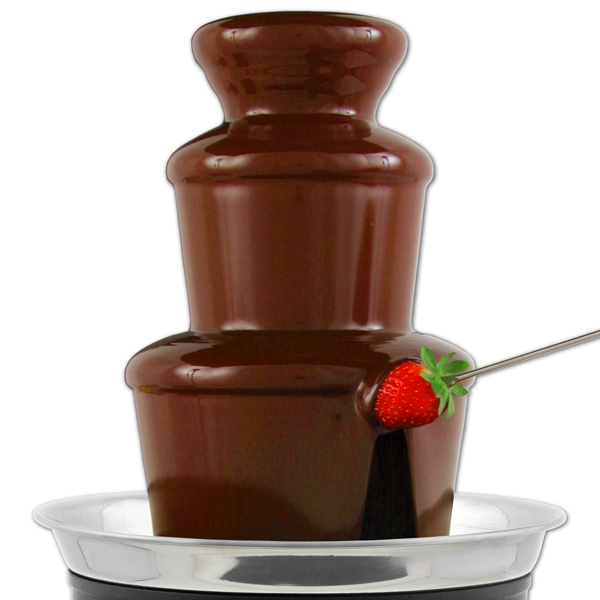
One student I interviewed uses periodic chocolate treats to motivate himself. This technique was picked up in elementary school from a teacher who used the method to encourage her students to read. One drawback with this strategy is that it requires the writer to maintain self-control. This method would not work for me!

http://www.barmans.co.uk/productimg/24842_large.jpg

Clear the To-Do List
Another writer said that he enjoyed large essay assignments because they motivate him to get all his other chores finished. The rationale behind this habit is that it clears the mind of distractions, allowing for a higher degree of focus. This is an idea my roommates could definitely get behind.

https://blogger.googleusercontent.com/img/b/R29vZ2xl/AVvXsEhyiN0D-DOw4O4KdBqAdH5Ny62nXUqttMFRh_cdJaLNxVZ5TzIHv_iNqZzbw_bZiKGJe2CoeNR8lGqRDsCSm5L8ki3r0g58ChbfQkW8kRX-8I7XFGDmocF_c_bnFGNL2eBHHy6FbMQTW3qs/s1600/to+do+list.png
Music = Creative Energy
In the brainstorming phase of the writing process, it’s a good idea to test out as many directions possible for your paper to go. One student uses the creative energy produced by music in order to keep his mind flexible.  Music helps him generate a variety of topic ideas before committing to a paper.    

http://www.appmakr.com/blog/wp-content/uploads/2014/05/Musical-Wallpapers.jpg

Café Vibes
According to one tutor, a café is the optimal place to sit down and concentrate on a paper.  With unlimited access to caffeine, this is one writing habit that will keep you supercharged all the way through to your last sentence.  One drawback with this strategy is that it requires the writer to have the ability to ignore distractions.  The tutor I talked to recalls one café visit in which a customer unknowingly played the Star Wars theme song on repeat. Apparently, they didn’t realize that their headphones were unplugged from the computer.   

https://media-cdn.tripadvisor.com/media/photo-s/03/df/db/79/le-cafe.jpg

Tricking the Brain into Positivity
The final writer I talked to likes to trick her brain into positivity. Her method involves changing the file names to her writing projects to names that are less intimidating. After working on a paper for a prolonged period of time, the file name becomes loaded with anxiety. To address this, this student changes the file name to something new.  I think I just might give this strategy of self-hypnosis a try!

http://www.thelawofattraction.org/wp-content/uploads/2013/06/hypnotic.gif

Some baseball players have unique routines they must go through before stepping up to bat.  I’ve heard of poker players, too, that fall into superstitious beliefs when they are on a winning streak. Writers are no different.  We all have our own habits and beliefs that for one reason or another help us through the writing process. Whether there is a scientific basis for these habits is debatable, but they do make us feel better.  And I think that’s the whole point.

Thursday, January 19, 2017

5 Steps to Composing the Academic E-mail


Crafting the perfect e-mail to send along to an instructor can be daunting, but following these five tips can change your e-mail game for the better.

Step One: Think of a direct, informative, and clear subject line.

The subject line is widely regarded among instructors to be one of the most important parts to an e-mail. Vague, nonexistent, or particularly lengthy subject lines result in e-mails that may be discarded by instructors. If the student cannot spend the time to properly format an e-mail that takes effort for the instructor to sort through, why should the instructor respond? Though this article is mainly for business e-mails, WikiHow suggests “summariz[ing] the email in a 6–8 word subject.”

Clear subject lines can ensure that recipients 
are more likely to respond to the e-mail. 

Step Two:
Consider an appropriate salutation and title.

Salutations are a sign of convention, regularity, and respect. Something as simple as “Dr. Nelson—” or “Dear Dr. Fields,” are common and expected upon sending the first message. And, in departing, “Sincerely,” followed by a name or anything else appropriate, is perfect in closing out an e-mail. (Oftentimes instructors will respond once or twice in the ensuing string of e-mails and drop salutations in response to the student, which then leaves it up to the student to continue using salutations or drop them accordingly.)

Step Three: Don’t be wordy.

The length of body paragraphs is quite crucial in breaking up important information so as not to come across as overbearing or cluttered in the e-mail. Recipients would much rather sift through an e-mail with multiple questions or concerns that is split up accordingly rather than one that contains a few blocks of text. 

Keeping it segmented and readable makes for an e-mail less intimidating to the recipient. MyEnglishTeacher.eu says that “[a] popular rule that you could . . . use [is] the KISS Test – Keep It Short and Simple.”

Step Four: Thank them for their time.

Though salutations (both introductory and parting) are formalities that serve the purpose of respect and acknowledgement of another’s time, you can never be too forward in your thanks to an instructor. By signing off an e-mail with “Thanks so much for your time!” or “I appreciate any light you can shed on this situation” just before your closing salutation, you can ensure that your recipient reads your e-mail as having a serious and friendly tone because you wrote it as such.

Appropriate thanks & closing salutations show respect to the recipient. 


Step Five:
Be. Patient.

Since students are almost always the party needing a favor, whether that is guidance on a project/essay or clarity on something hazy, they serve the role of being patient in waiting for a response. (Recipients are not expected to drop everything that is ongoing in their lives simply to respond to a student’s e-mail right away.)

Normally, recipients may respond within a few days; however, a week is sometimes warranted in that instructors are typically professors with full workloads who have many other students e-mailing them simultaneously. A follow-up e-mail is never a bad idea so long as sufficient time (typically a week) has passed.


By checking off these five steps each time you send an e-mail to an instructor, you can be sure to expect a timely (and often appreciative!) response.