Monday, February 6, 2017

The Literary World of Twitter

If you’re like me, you love social media. It’s a great way to keep up with friends, find out what your favorite celebrities are doing, and catch up on important news topics. Twitter especially can be a great resource for reading thousands of different perspectives on entertainment and even politics. It’s also great for following what’s happening in the literary world.

You can follow all your favorite authors, yes, but you can also follow all the big publishing companies, indie bookstores, and even the dictionary. Yep, you can even follow the Merriam-Webster dictionary itself (@MerriamWebster).

Okay, I can practically hear you asking, “Why on earth would I want to follow the dictionary?” The answer to this question is because their social media is incredibly relevant and interesting, and you learn a lot without even realizing it. The dictionary understands how social media can be useful in creating interest, particularly about words. The people behind Merriam-Webster’s Twitter know exactly how to participate in pop culture and, especially these days, politics.


Much of Merriam-Webster’s tweets these days talk about words and literacy that play important parts in today’s political sphere. They tackle ideas like “alternative facts” and the origins of the word “snowflake” as well as correcting misinformation about what words actually mean.

They also do a great deal of teaching the public what goes on behind the scenes of the dictionary world and how words get into the dictionary in the first place.


Merriam-Webster also Tweets about words of the day/week/month/year and how their usage may have changed over time. You may think that the dictionary would argue against the changing of word meaning, but they often show how words can have many different, often conflicting definitions, and they fully believe that word meanings can and should change over time.


Merriam-Webster, and many, if not all, other dictionaries, believe that the English language is not static, but rather fluid and constantly changing. They adapt their dictionaries and definitions constantly to reflect a dynamic language that changes as its users change.


These Twitters aim to show how words and how we use words can often have a lasting impact on how we as English users develop and communicate with each other, and they do it in ways that align with 21st century ideas, beliefs, and technology.

Thursday, January 26, 2017

Weird Writing Habits from the Writing Center

What if I told you there was a proven method to make any writing assignment a cinch?  What if, from now on, all you had to do was follow a list of steps and your research paper would be done? 

Don’t get too excited. There is no tried-and-true workflow. After interviewing tutors at the writing center, I discovered that most writers develop their own idiosyncratic writing habits.  These habits were sometimes funny, sometimes ingenious, and most often rooted in superstitious beliefs.

The following is a list of the most interesting writing habits in the writing center:

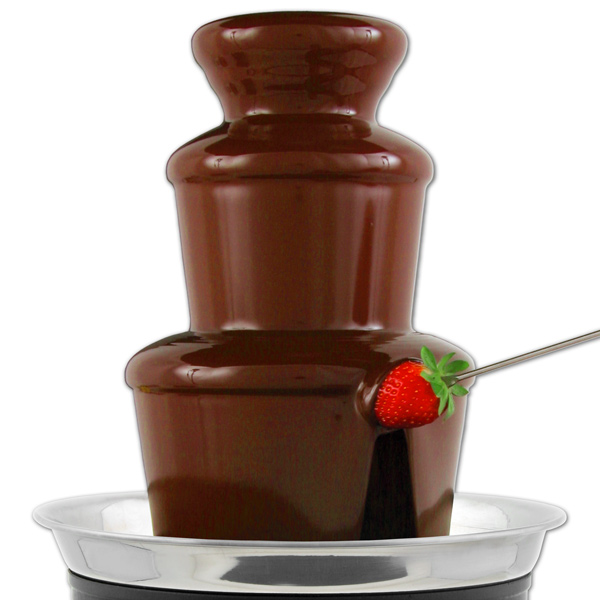
Chocolate Motivation
One student I interviewed uses periodic chocolate treats to motivate himself. This technique was picked up in elementary school from a teacher who used the method to encourage her students to read. One drawback with this strategy is that it requires the writer to maintain self-control. This method would not work for me!

http://www.barmans.co.uk/productimg/24842_large.jpg

Clear the To-Do List
Another writer said that he enjoyed large essay assignments because they motivate him to get all his other chores finished. The rationale behind this habit is that it clears the mind of distractions, allowing for a higher degree of focus. This is an idea my roommates could definitely get behind.

https://blogger.googleusercontent.com/img/b/R29vZ2xl/AVvXsEhyiN0D-DOw4O4KdBqAdH5Ny62nXUqttMFRh_cdJaLNxVZ5TzIHv_iNqZzbw_bZiKGJe2CoeNR8lGqRDsCSm5L8ki3r0g58ChbfQkW8kRX-8I7XFGDmocF_c_bnFGNL2eBHHy6FbMQTW3qs/s1600/to+do+list.png
Music = Creative Energy
In the brainstorming phase of the writing process, it’s a good idea to test out as many directions possible for your paper to go. One student uses the creative energy produced by music in order to keep his mind flexible.  Music helps him generate a variety of topic ideas before committing to a paper.    

http://www.appmakr.com/blog/wp-content/uploads/2014/05/Musical-Wallpapers.jpg

Café Vibes
According to one tutor, a café is the optimal place to sit down and concentrate on a paper.  With unlimited access to caffeine, this is one writing habit that will keep you supercharged all the way through to your last sentence.  One drawback with this strategy is that it requires the writer to have the ability to ignore distractions.  The tutor I talked to recalls one café visit in which a customer unknowingly played the Star Wars theme song on repeat. Apparently, they didn’t realize that their headphones were unplugged from the computer.   

https://media-cdn.tripadvisor.com/media/photo-s/03/df/db/79/le-cafe.jpg

Tricking the Brain into Positivity
The final writer I talked to likes to trick her brain into positivity. Her method involves changing the file names to her writing projects to names that are less intimidating. After working on a paper for a prolonged period of time, the file name becomes loaded with anxiety. To address this, this student changes the file name to something new.  I think I just might give this strategy of self-hypnosis a try!

http://www.thelawofattraction.org/wp-content/uploads/2013/06/hypnotic.gif

Some baseball players have unique routines they must go through before stepping up to bat.  I’ve heard of poker players, too, that fall into superstitious beliefs when they are on a winning streak. Writers are no different.  We all have our own habits and beliefs that for one reason or another help us through the writing process. Whether there is a scientific basis for these habits is debatable, but they do make us feel better.  And I think that’s the whole point.

Thursday, January 19, 2017

5 Steps to Composing the Academic E-mail


Crafting the perfect e-mail to send along to an instructor can be daunting, but following these five tips can change your e-mail game for the better.

Step One: Think of a direct, informative, and clear subject line.

The subject line is widely regarded among instructors to be one of the most important parts to an e-mail. Vague, nonexistent, or particularly lengthy subject lines result in e-mails that may be discarded by instructors. If the student cannot spend the time to properly format an e-mail that takes effort for the instructor to sort through, why should the instructor respond? Though this article is mainly for business e-mails, WikiHow suggests “summariz[ing] the email in a 68 word subject.”

Clear subject lines can ensure that recipients 
are more likely to respond to the e-mail. 

Step Two:
Consider an appropriate salutation and title.

Salutations are a sign of convention, regularity, and respect. Something as simple as “Dr. Nelson—” or “Dear Dr. Fields,” are common and expected upon sending the first message. And, in departing, “Sincerely,” followed by a name or anything else appropriate, is perfect in closing out an e-mail. (Oftentimes instructors will respond once or twice in the ensuing string of e-mails and drop salutations in response to the student, which then leaves it up to the student to continue using salutations or drop them accordingly.)

Step Three: Don’t be wordy.

The length of body paragraphs is quite crucial in breaking up important information so as not to come across as overbearing or cluttered in the e-mail. Recipients would much rather sift through an e-mail with multiple questions or concerns that is split up accordingly rather than one that contains a few blocks of text. 

Keeping it segmented and readable makes for an e-mail less intimidating to the recipient. MyEnglishTeacher.eu says that “[a] popular rule that you could . . . use [is] the KISS Test – Keep It Short and Simple.”

Step Four: Thank them for their time.

Though salutations (both introductory and parting) are formalities that serve the purpose of respect and acknowledgement of another’s time, you can never be too forward in your thanks to an instructor. By signing off an e-mail with “Thanks so much for your time!” or “I appreciate any light you can shed on this situation” just before your closing salutation, you can ensure that your recipient reads your e-mail as having a serious and friendly tone because you wrote it as such.

Appropriate thanks & closing salutations show respect to the recipient. 


Step Five:
Be. Patient.

Since students are almost always the party needing a favor, whether that is guidance on a project/essay or clarity on something hazy, they serve the role of being patient in waiting for a response. (Recipients are not expected to drop everything that is ongoing in their lives simply to respond to a student’s e-mail right away.)

Normally, recipients may respond within a few days; however, a week is sometimes warranted in that instructors are typically professors with full workloads who have many other students e-mailing them simultaneously. A follow-up e-mail is never a bad idea so long as sufficient time (typically a week) has passed.


By checking off these five steps each time you send an e-mail to an instructor, you can be sure to expect a timely (and often appreciative!) response.

Tuesday, November 8, 2016

The Perks of Trying Something New


I know, I know. How many times have we been told throughout our academic careers that we need to try new things, “to take chances, make mistakes, get messy”? 

I think every sports coach ever has the poster “You miss 100% of the shots you never take” hanging in their classrooms or locker rooms. Do I really need to harp on the many reasons these are good for us? Yes, I do because, in reality, many of us are too afraid to take any important risks in our writing, especially if it’ll be graded.

I’ll be the first to admit that I’d rather stick to what I know.  However, I got the chance to learn new writing skills in a class on reviewing children’s literature. I had never written anything close to a legitimate book review before, but children’s lit is one of my favorite topics, so I was able to take small steps forward, using content I already knew as my foundation. 

 Stepping up

In order to succeed, I had to learn a different style of writing. Most reviews are fewer than 200 words. Therefore, I was forced to get “to the point” while still being extremely detailed and analytic. Every word counted. For me, that was a tough requirement. I like taking my time to get my point across, but I couldn’t in these reviews. It was a tough skill to learn, but I can now transfer that skill to my academic writing.

I also had to be more aware of my audience. Reviews are meant for a variety of people (not just a teacher) who want to know if a book is worth buying. A review should always be interesting. I’m used to academic writing, which, honestly, can be pretty bland. Writing reviews forced me to find ways to keep my writing interesting, and once I learned how to do that, I could adapt that skill to make my other academic writing more exciting.


I didn’t know what to expect in a class about writing reviews. I did it anyway. I recognized that I needed to expand my writing skills to include new styles. Because I had the courage to submit myself to uncertainty, I gained confidence in myself as a writer and signed up for a fiction writing class this semester.

I had never written fiction before (unless you count some really bad Harry Potter fan fictions). Before this past year, I was certain I was awful at it and wouldn’t waste my time working at it, even though I was always secretly very interested in writing fiction. It turns out that I’m actually not that bad at it!

Together Everyone Achieves More with TEAM in gold letters classroom poster

As sappy as those motivational posters are, they do have a point. We have to continue expanding what we know and how we write. We write, and so we evolve and adapt and learn.